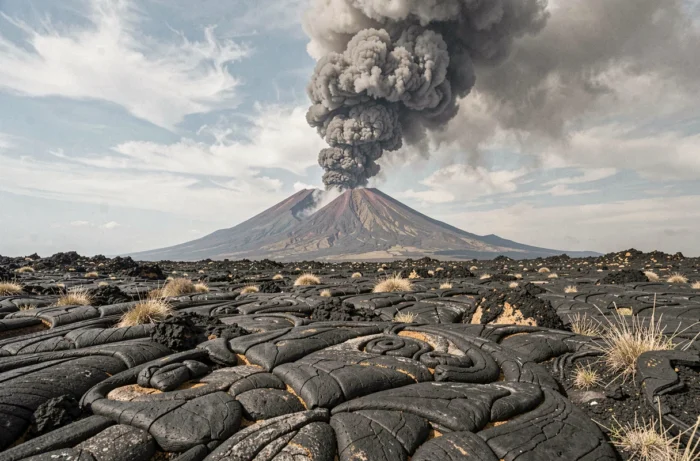
Etna has entered a particularly unstable eruptive phase since the end of July 2026, with overlapping explosive and effusive episodes. The VONA (Volcanic Observatory Notice for Aviation) issued by INGV Osservatorio Etneo fluctuated between red and orange several times in August. For travelers in Sicily, the question is no longer whether Etna is active, but how to interpret these operational signals to adjust an itinerary.
VONA and aviation alert on Etna: decoding the red-orange shifts of August 2026
The sequence of alerts in August 2026 calls for a granular reading. INGV issued several VONA within a few days, with a rapid alternation between red code and orange code. The intensification of lava fountains at the end of July triggered the switch to red, followed by a downgrade to orange, then a temporary return to red before another downgrade to orange on August 15.
A red aviation code signals the presence of volcanic ash in the airspace at cruising altitudes or nearby. Immediate restrictions then hit Catania airport. The return to orange does not eliminate the risk: it indicates a reduction in ash emissions at altitude, while ground eruptive activity may remain sustained.
We observe that the mainstream press summarizes these episodes as mere “airport closures.” Following the activity of Etna today on a daily basis allows for distinguishing phases where only arrivals are suspended from those where all traffic is interrupted. After the downgrade on August 15, Catania restarted its flights, but with reduced slots and cascading delays for several days.
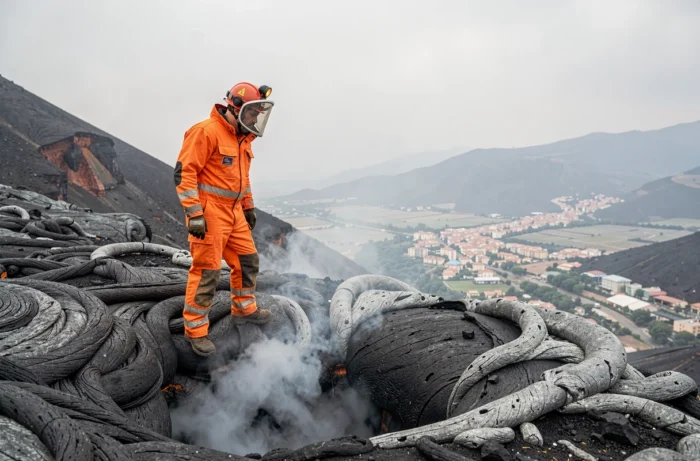
Valle del Bove and Voragine crater: mapping the active vents of August 2026
Activity was not limited to the summit craters. At the beginning of August, effusive vents opened in the Valle del Bove, producing lava flows while explosive episodes continued at the summit. This dual configuration (effusive on the flank, explosive at the summit) complicates the delineation of exclusion zones.
The Voragine crater, usually less publicized than the Southeast crater, experienced notable explosive activity in mid-August. Together with Bocca Nuova, it forms the central complex of Etna. Their joint reactivation alters the degassing dynamics of the structure.
This distinction has direct consequences for hikers. The flows in the Valle del Bove descend eastward, away from the classic trails on the southern slope. However, ash fallout and ballistic projections from the Voragine cover a wider perimeter around the summit.
Consequences for accessible areas
Above approximately 2,500 m (the cable car’s arrival station), the requirement for a certified guide applies at all times. When activity intensifies, municipal ordinances lower the permitted altitude ceilings. The one from the mayor of Sant’Alfio, dated August 8, 2026, mandates accompaniment by alpine or volcanological guides, prohibits leaving marked trails, and sets a limit at 2,050 m on the northeast slope.
- South slope (Rifugio Sapienza): free access in autonomy at lower altitudes, but the cable car and high-altitude excursions may be suspended without notice as soon as a red VONA is issued
- Northeast slope (Sant’Alfio): local ordinance limiting access to 2,050 m, possible equipment checks, guide recommended
- Valle del Bove: area of active flows in August 2026, access closed by authorities and increased monitoring by INGV
Catania airport: timeline of closures and passenger rights
Catania-Fontanarossa airport experienced repeated closures between August 8 and 15, 2026, during peak season. Arrivals were suspended as of August 8 due to ash fallout. Partial reopenings followed, interrupted by new restrictions.
Each shift in the VONA triggered a chain reaction on air traffic. Passengers redirected to alternative airports face limited capacities, as these secondary infrastructures do not easily absorb such a traffic reroute.
European regulation CE 261/2004 applies, but volcanic eruptions are classified as extraordinary circumstances. Airlines must provide assistance (accommodation, meals, rerouting), while no flat-rate compensation is due for cancellations related to ash. We recommend checking the conditions of your travel insurance: standard policies often exclude volcanic events.
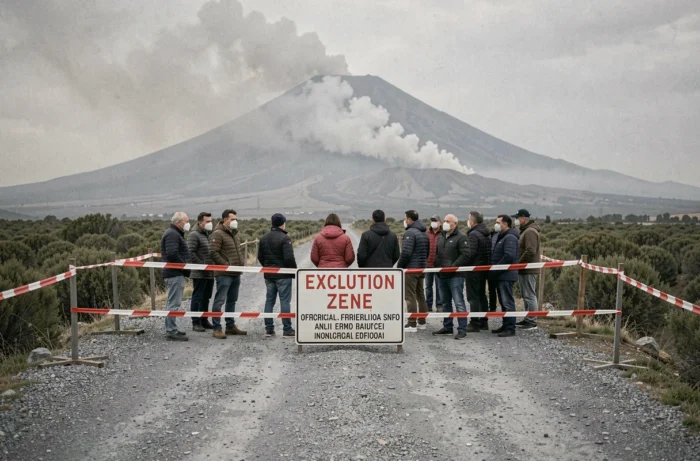
Organizing an excursion on Etna during volcanic activity
INGV Osservatorio Etneo provides continuous monitoring. Volcanic tremors, SO₂ and CO₂ emissions, ground deformation, thermal monitoring by satellite: these parameters feed daily bulletins. Consulting this data the day before an excursion allows for anticipating a restriction rather than discovering it at the foot of the cable car.
- Check the VONA level on the INGV website before each outing: a yellow or orange code does not necessarily prohibit low-altitude hiking, but a red code suspends all excursions above the forest zone
- Prepare equipment suitable for altitude (the summit exceeds 3,300 m): cold, wind, and fog pose more problems than lava for most hikers
- Bring an FFP2 mask in case of fine ash fallout, including at low altitudes on the leeward slope
- Confirm that your guide holds the certification required by local ordinances, as checks were intensified in August 2026
Etna remains accessible outside of paroxysmal phases, provided that each outing is based on the day’s data. The weeks of August 2026 show that the window between two explosive episodes can shrink to a few hours. Logistical flexibility (alternative airport, extra night, alternative itinerary) is an integral part of planning a stay in eastern Sicily.