
Dead phone, SIM card blocked abroad, child at camp without credit: in each of these situations, the instinct is to make a collect call. This mode of communication, where the person receiving the call pays for it, has existed since the early days of telephony. It has lost visibility with unlimited plans, but it has not disappeared. Its operation and access conditions deserve a concrete overview.
Authentication procedure and access numbers for a collect call
It is often assumed that one just needs to pick up the phone and ask the operator to charge the caller. The reality is more regulated. To make a collect call from a landline in France, the historical method involves a dedicated access number: you dial this number, then the recipient’s number.
The recipient then receives an automatic message informing them that a collect call is being directed to them. They can accept or decline the call, usually by pressing a key. If the access code option has been activated on the recipient’s line, the caller must also enter this code for the call to go through.
Some support or assistance networks still use more complex procedures, with an identifier followed by a PIN code before the access number. This is not a simple direct call: the procedure may include several authentication steps.

Collect call from a mobile or abroad: what changes
From a mobile phone, the situation becomes more complicated. Not all mobile operators offer native access to the collect call service. Collect calls are mainly associated with landlines and payphones, the number of which has significantly decreased.
Internationally, each country applies its own rules. In Quebec, they refer to it as a reverse charge call, a term recommended by the Office québécois de la langue française. Access numbers differ from country to country, and you must dial the international code of the destination country before the recipient’s number.
Concrete constraints to anticipate
- The recipient must have a line that accepts collect calls. Some subscribers have disabled this option, sometimes unknowingly, through their operator.
- From a mobile abroad, responses vary regarding the ability to access collect call numbers. Some networks block these calls or do not route them correctly.
- The cost charged to the recipient is often higher than a regular call, as the service includes a surcharge related to the reverse charge mechanism.
Checking that the recipient’s line accepts collect calls before relying on it prevents finding oneself without a solution at a critical moment.
Modern alternatives to collect calls: VoWiFi and VoIP applications
Collect calls meet a specific need: to call when one has no means of payment or credit. Alternatives have multiplied, and some cover exactly this use case without going through the traditional collect call circuit.
Wi-Fi calling (VoWiFi) allows calls to be made via an internet connection without using the traditional mobile network. Several operators offer this option, which can be activated in the phone settings. Essentially, if you can connect to a Wi-Fi network but have no mobile signal, VoWiFi turns the internet connection into a phone relay. The call is billed as a regular call, according to the current plan.
Free applications and practical limits
Applications like Viber allow users to make free voice calls between connected users. The advantage is clear: no cost for the caller or the recipient, provided both parties have installed the application and have internet access.
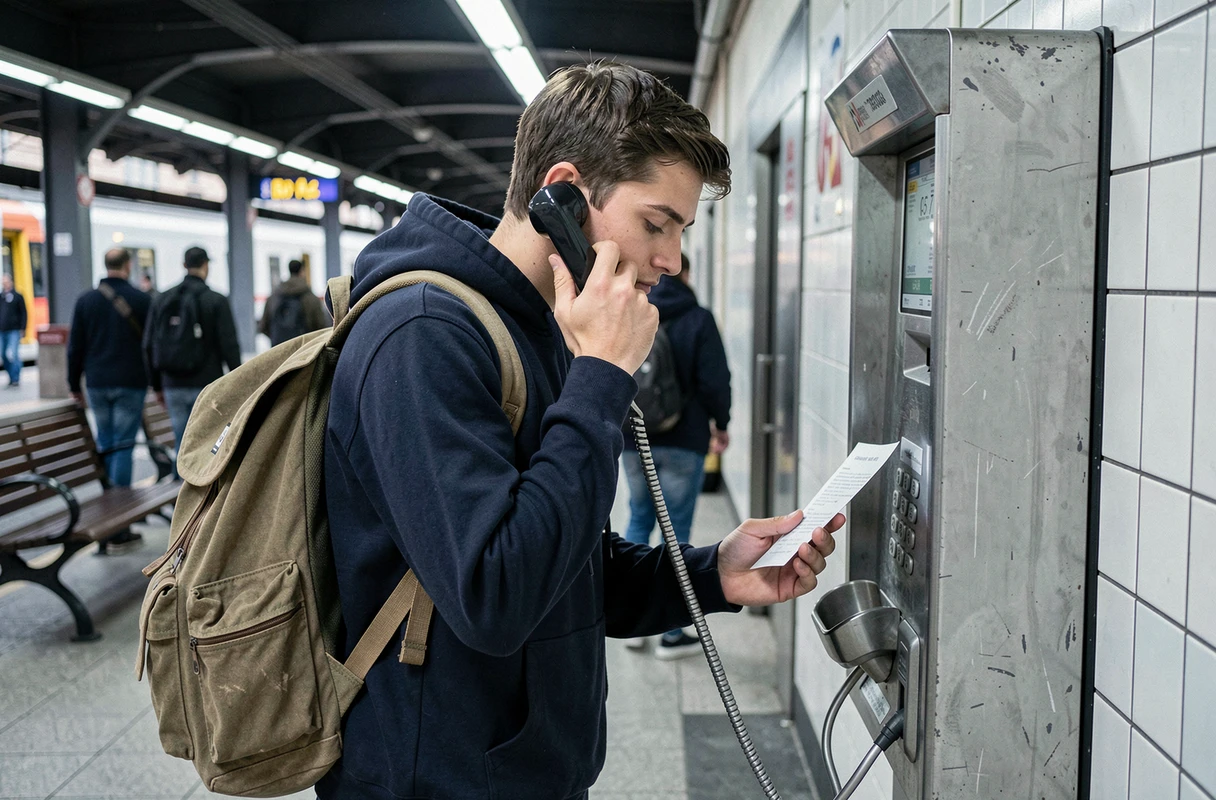
The limitation of these solutions is clear. You must have a functional smartphone and a connection. Collect calls remain the only recourse when you only have access to a landline or a payphone, without a smartphone or Wi-Fi nearby.
Collect calls for businesses and assistance services
The general public use of collect calls has become rarer, but the service still has a presence in professional and institutional contexts. Some companies maintain reverse charge lines to allow their clients or partners to reach them without cost, especially internationally.
Assistance services, whether legal aid lines, consular services, or social support structures, still use this mechanism. In these cases, collect calls serve as a safety net for individuals without telephone resources.
The numbering and routing of these calls have become more regulated than before. Operators and telephony tools remind users of the necessity to dial international codes correctly and to follow the specific instructions for each network.
When collect calls still make sense
One might think the service is obsolete. It is not in three specific situations: a minor traveling without a mobile phone, a traveler whose phone is out of service in a country where payphones still exist, and a call to an assistance line that covers the costs. Outside of these cases, mobile plans and VoIP cover most needs.
The collect call is not intended to become a common mode of communication again. Its usefulness is measured by the number of situations where it remains the only option when all others are inaccessible. Keeping in mind the access number of your operator and checking that your loved ones have not blocked reverse charge calls on their line is the minimum to ensure the service works when you need it.