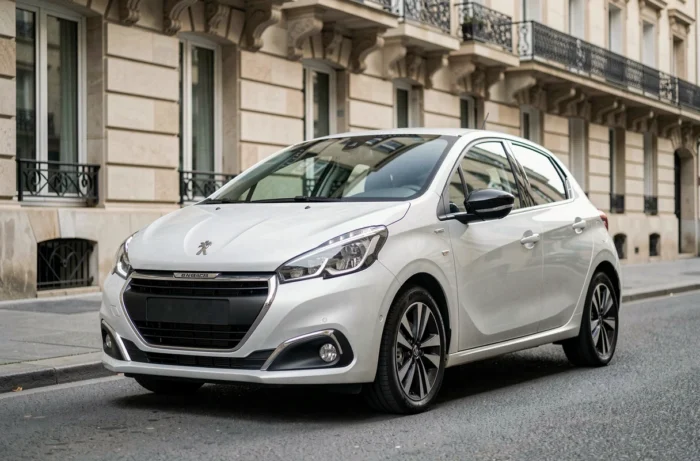
We rarely drive the same way during the week and on weekends. Someone who travels 15 kilometers in traffic every morning does not have the same constraints as someone who speeds down the highway every Friday evening. Over the years, the Peugeot 208 has expanded its range of engines, and the real trap would be to choose solely based on the technical specifications without comparing the engine to its actual use.
Automatic or manual transmission on the 208: a criterion as important as fuel
The impact of the transmission on comfort and consumption in daily driving is often underestimated. On the Peugeot 208, this factor directly influences driving pleasure, especially in the city.
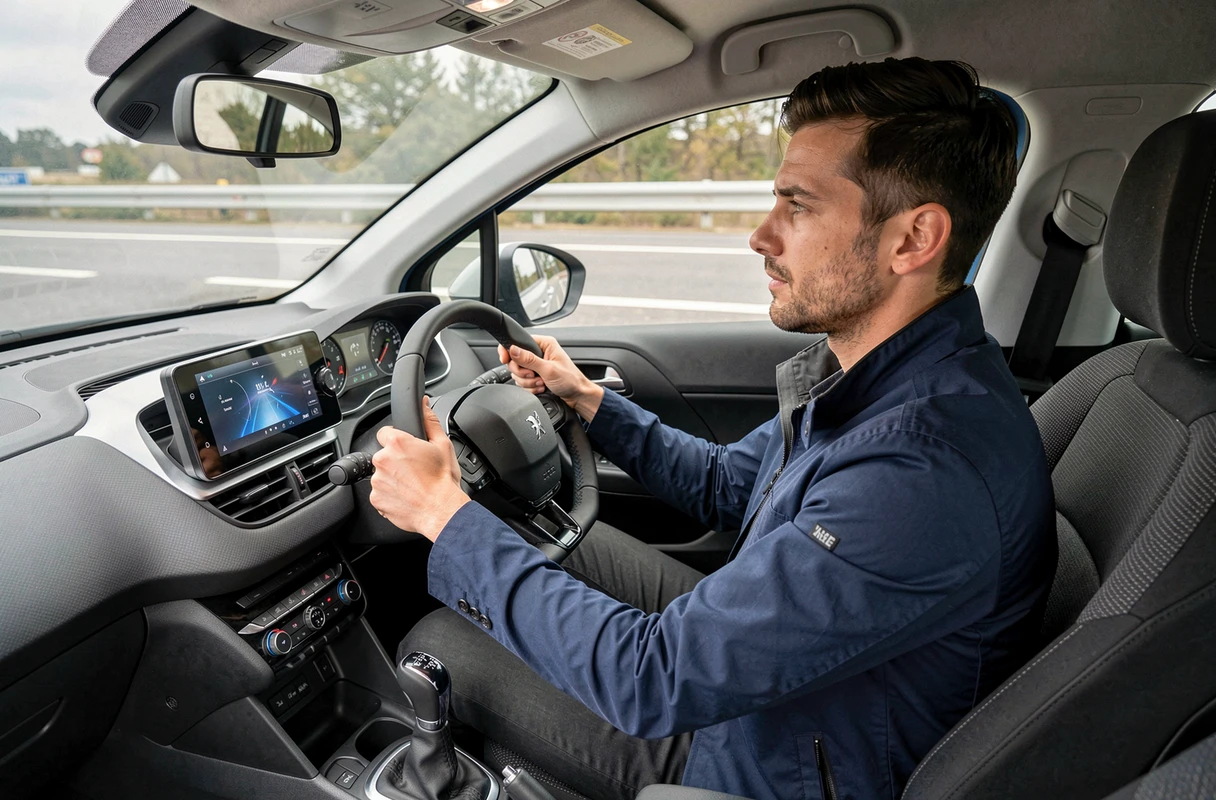
The entry-level petrol engines are paired with a manual gearbox. For urban trips with frequent stops, one finds themselves constantly juggling between first and second gears. The 48V hybrid requires the e-DCS6 automatic transmission, which radically changes the game for daily use in urban areas.
To know which engine to choose for the Peugeot 208, one must first consider the transmission. A driver who primarily drives in the city will gain comfort with the automatic, while a mixed driver who likes to maintain control over their gears may prefer the manual paired with the classic petrol engine.
The maintenance cost also differs: an automatic transmission requires specific monitoring of the transmission fluid, whereas the manual remains simpler to maintain over time.
Turbo 100 vs PureTech 100: what really changes on the 208
With the renewal of the range, Peugeot has started replacing the PureTech 100 with a Turbo 100 on recent versions. This is not just a name change. The engine has evolved, and this point deserves attention if buying new.
The PureTech has carried a mixed reputation due to distribution issues in certain generations. Feedback on this point varies according to model years and maintenance conditions, but caution is advised when buying used. On the Turbo 100, Peugeot has revised the mechanical base, which is reassuring for a new purchase.
Which petrol engine for which profile on the 208
Both engines share a 3-cylinder architecture and deliver torque available quite low in the rev range. In urban and suburban driving, the difference in feel is subtle. It is on the highway, with frequent accelerations, that the turbo’s behavior stands out with a slightly more responsive response.
If considering a used 208, checking the distribution history on a PureTech is non-negotiable. On a new model, the Turbo 100 simplifies the question: you start with an updated mechanical base.
48V Hybrid on the Peugeot 208: the compromise that replaces diesel
Diesel has long been the default choice for high-mileage drivers of the 208. With the BlueHDi becoming a niche option, the 48V hybrid emerges as the alternative for mixed trips.
The principle is simple: a small 48-volt electric motor assists the petrol thermal engine during starting and acceleration phases. You do not drive in full electric mode, but you significantly reduce real consumption in the city.
- In dense urban traffic, the system shuts off the thermal engine at stops and assists with restarts, smoothing out consumption
- On the road, the electric assistance is discreet, and consumption approaches that of a conventional petrol engine
- The e-DCS6 automatic transmission, required with the 48V hybrid, provides real comfort in daily traffic jams
For a driver who travels between the city and the suburbs daily, this system represents a good compromise without the recharging constraints of a 100% electric vehicle.
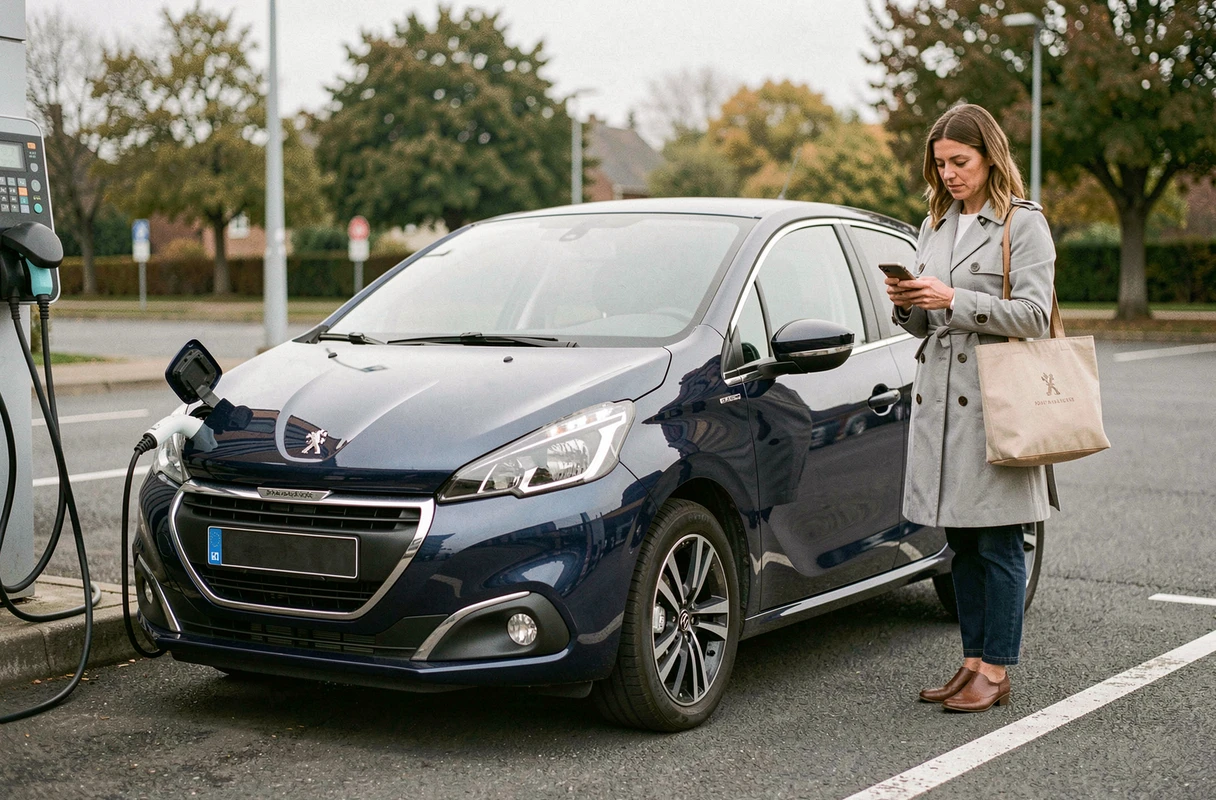
Peugeot e-208 electric: two power levels, two usage logics
The electric version of the 208 is no longer limited to a single motor. There is now a more powerful variant that changes the positioning of the e-208 beyond strict urban use.
The most powerful version offers a higher WLTP range, making it viable for regular suburban trips or weekend getaways without planning each charging station.
Home charging: the real selection filter
Before considering the e-208, one must ask a concrete question: do we have a charging point at home or at work? Without this, dependence on public charging stations turns every week into a logistical headache.
Cold weather also significantly impacts real range. A winter trip with heating can notably reduce the range compared to the announced WLTP values. For primary urban use with a garage, the e-208 delivers on its promises. For a regular highway profile, the thermal or hybrid remains more reassuring.
Trim and engine 208: combinations to avoid
Not all engines are available with all trims. One cannot necessarily pair the engine they want with the trim they like, and some combinations deserve consideration.
- The entry-level engine paired with a high trim (GT) increases the cost without providing the dynamism expected from this trim, which focuses on larger wheels and a sporty look
- The 48V hybrid associated with a mid-level trim (Allure or Style) often represents the best equipment-pleasure ratio for daily use
- On the e-208, the GT trim adds weight in equipment, which can slightly reduce effective range
The choice of engine and trim should be made together, not separately. A test drive in the exact configuration aimed for remains the best way to validate that the combination works for one’s own use. The 208 offers enough combinations to find the right balance between budget, comfort, and driving pleasure.