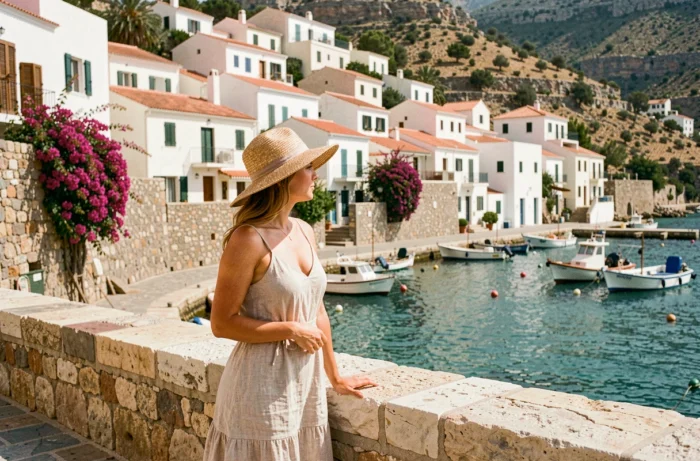
The Mediterranean refers to a maritime basin bordered by three continents, where more than twenty countries offer stops accessible from France. For a first trip, this geographical proximity reduces travel times and simplifies logistics, making it a concrete learning ground before considering more distant destinations.
From Marseille or other ports in southern France, regular ferry or cruise ship connections allow you to reach Spain, Italy, or the Greek islands in a few hours to a few days. The diversity of travel formats (all-inclusive cruise, ferry combined with a land stay, island hopping) offers various levels of commitment for beginners.
Maritime regulations in the Mediterranean: what changes for travelers
Before choosing an itinerary, it is essential to understand the regulatory framework that applies to ships operating in this basin. Since May 1, 2025, the Mediterranean is classified as a SECA zone (sulfur emission control area) under Annex VI of the MARPOL convention. All ships, including ferries and small cruise ships, must use fuel containing a maximum of 0.1% sulfur.
In practice, this means less visible smoke and better air quality in port stops. For a traveler boarding in Marseille or Civitavecchia, the difference is mainly felt at departure and arrival when the ship maneuvers near the docks.
Another evolution to be aware of: the European Union Emissions Trading System (EU ETS) is gradually extending to maritime transport. Intra-EU journeys are affected, with full impact expected from 2026-2027. The cost of these carbon quotas could be passed on to the price of cruise and ferry tickets.
Companies like MSC or those operating from France are already incorporating these parameters into their pricing. As detailed by the E-Nomad blog for travelers, these environmental constraints are gradually redefining the available offerings in the Mediterranean.

Choosing your travel format in the Mediterranean: cruise, ferry, or free itinerary
The format determines the budget, pace, and level of autonomy. Three main options are available for beginners.
- All-inclusive cruise: the ship serves as a floating hotel. The price includes the cabin, meals, and transport between stops. This is the most structured format, suitable for those who do not want to manage daily logistics. Departures from Marseille to Italy or Spain are frequent.
- Ferry with land stay: you reach a destination (Corsica, Sardinia, Balearic Islands) by boat, then arrange your own accommodation on-site. This format requires more preparation but offers total freedom once on land.
- Island hopping: reserved for slightly more seasoned travelers, this format involves chaining several short crossings, for example, between the Greek islands. Inter-island connections are not always daily, which requires anticipating schedules and availability.
For a very first trip, the all-inclusive cruise simplifies the mental load. The ferry is better suited for those who prefer to settle in one place for several days.
Departure ports accessible from France
Marseille remains the most commonly used departure port for French cruisers. Civitavecchia (port of Rome) and Barcelona are the other two major hubs in the western Mediterranean, accessible by short flight or train.
The choice of departure port directly influences the duration and cost of the trip. Boarding in Marseille avoids the plane ticket and allows you to reach the ship by car or TGV, which reduces the carbon footprint and transport budget.
Budget and duration of a first cruise in the Mediterranean
The most common duration for a first cruise in the Mediterranean is between four and eight days. Short itineraries (four to five days) typically cover two or three stops along the French, Spanish, or Italian coasts. One-week itineraries allow reaching Greece or Turkey.
The budget varies significantly depending on the company, season, and type of cabin. A few parameters to consider before booking:
- All-inclusive on board covers main meals, but drinks, excursions, and additional services are often charged extra.
- Stops generate expenses on-site (restaurants, local transport, visits). Plan a separate envelope from the cruise price itself.
- Off-season periods (spring, autumn) offer lower rates and reduced crowds in ports. Spring in the Mediterranean combines moderate prices and pleasant weather, making it the most suitable window to start.

Summer heatwaves and changes in attendance
Episodes of extreme heat in summer push some travelers to shift towards destinations further north or to postpone their stay. This phenomenon, documented by analyses of tourist perception in the Mediterranean, is gradually changing seasonality. The months of June and September are gaining attractiveness at the expense of July-August.
For a first trip, avoiding the peak summer season reduces both budget and thermal discomfort. Temperatures remain high in spring and early autumn, but without the peaks that complicate onshore visits.
Preparing the formalities before departure
Intra-EU travel in the Mediterranean (France, Spain, Italy, Greece) only requires a valid identity card for French nationals. As soon as the itinerary includes a stop outside the EU (Turkey, Tunisia, Montenegro), a valid passport becomes mandatory, sometimes with a minimum validity of six months after the return date.
Cruise companies provide the list of required documents at the time of booking. Checking these requirements at least a month before departure allows time to renew any expired document.
The Mediterranean remains a basin where the logistics of the first trip simplify year after year, with direct departures from France and all-inclusive formats. New environmental standards are changing the experience on board and at port without complicating preparation. The real decision for a beginner revolves around the format (cruise or ferry) and the season, two choices that alone determine the quality of the stay.