
The spring-summer 2026 fashion shows have confirmed a shift that the market has been preparing for several seasons: the value of a piece is no longer measured solely by its cut, but by the traceability of its fiber and its ability to reintegrate into a circuit after use. The fashion trends of this season reflect this transition in everyday wardrobes.
Mono-material constructions and bio-sourced fibers: the technical foundation of a stylish wardrobe
We observe an acceleration of mono-material constructions in the 2026 collections, where a single type of fiber makes up the entirety of the garment. This technical choice facilitates recycling at the end of life and eliminates the sorting stages of mixed materials, a point that mainstream articles almost never address.
Bio-sourced fibers are gaining prominence. “Apple leather,” algae-based textiles, and regenerative fibers have moved beyond the prototype stage. Several brands are now incorporating them into ready-to-wear pieces available in stores, not just on the runways.
The direct consequence on the look: materials gain in texture and structure without resorting to synthetic blends. A dress made from algae fiber has a matte drape that is very different from recycled polyester. To closely follow these developments, the fashion section of Revue de Presse regularly shares material innovations spotted on the runways and in capsule collections.
Anti-fast fashion law: what changes concretely for your purchases this season
Parliament has definitively adopted the anti “ultra fast-fashion” law in June 2026. Advertising for ultra-fast fashion brands is now prohibited, and the brands concerned must display messages encouraging sobriety, reuse, and repair.
This regulatory framework redistributes the cards for the current season. Brands that relied on weekly collection renewals lose their main visibility lever in France. For consumers, this translates into an advertising offer refocused on pieces with a longer lifespan.
In practice, we recommend checking three points before any seasonal purchase:
- The exact composition of the garment (single fiber or blend), which determines its recyclability and often its durability in washing
- The presence of a digital product passport, which traces the origin of the material and the manufacturing steps
- The existence of a take-back or repair program with the brand, which has become a criterion of seriousness rather than a marketing argument
These reflexes are no longer a matter of activism: French regulation is progressively making them the market norm.
Circular fashion and second-hand: the pieces that define a stylish look in 2026
Second-hand now represents a significant share of the clothing market in France. It is no longer a parallel circuit reserved for vintage: it is a main purchasing channel for building a coherent silhouette.
Upcycling, the rental of event pieces, and resale integrated into the brands’ own platforms structure what we call circular fashion. The most visible trends this season fully align with this.

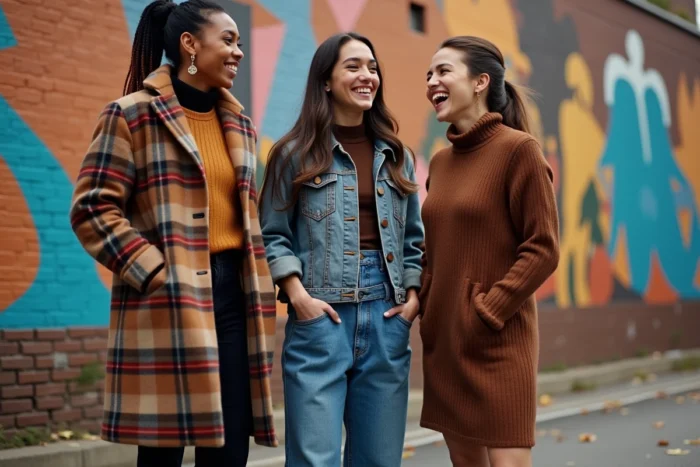
In terms of colors, butter yellow and earthy tones dominate the spring-summer 2026 collections. The cuts remain loose: barrel jeans are establishing themselves as the reference denim piece, while oversized sweaters are worn even in summer looks, in lightweight mono-fiber knit.
Regarding silhouettes, the midi skirt and backless dress return with simplified constructions. Fewer linings, less fusible reinforcements, more fluidity in the drape. A well-constructed garment made from a single noble material replaces several disposable pieces.
Digital product passport: reading the fashion label differently
The “digital product passport” is starting to appear on the labels of certain collections this season. This device, often represented by a QR code, provides access to the complete supply chain of the garment: fiber origin, weaving location, manufacturing conditions.
For an informed buyer, it is a formidable selection filter. A brand that provides this data willingly exposes itself to scrutiny. Those that do not, while the technology exists, send a signal.
This digital passport is part of the broader trend of transparency in supply chains promoted by the 2026 collections. We have spotted it on pieces ranging from basic t-shirts to structured jackets, proving that the device is no longer reserved for the luxury segment.
- Recycled and regenerative fibers are individually traceable thanks to these passports
- The estimated lifespan of the garment may be included in the data, which helps to decide between two similar pieces
- The consumer can verify the consistency between marketing claims and production reality
Shoes and accessories: style signatures to prioritize
Shoes follow the same logic as the textile wardrobe. Models made from alternative materials (plant leather, natural rubber soles) are gaining ground in mid-range collections. The flat sandal with wide straps and the block-heeled mule are the two key silhouettes of the season.
On the accessories side, bags made from upcycled materials are becoming full-fledged style pieces, not aesthetic compromises. The finishes are approaching traditional leather, and the colors follow the seasonal palette (butter tones, terracotta, off-white).
Minimalism remains the guiding thread. Fewer visible logos, more focus on texture and grain. A trend consistent with the spirit of sobriety that both regulation and runways are simultaneously encouraging this season.
This season’s style can be summed up in a simple arbitration: each piece in the wardrobe must justify its presence through its material, traceability, and longevity. The fashion trends of 2026 no longer reward accumulation, but the relevance of each clothing choice.