
The Birkenstock cork-latex footbed remains a biomechanical reference, but the anatomical sole is no longer enough to justify a premium price against brands that leverage foam technologies and more targeted orthopedic constructions. For the past two years, we have observed a clear segmentation between sport recovery-oriented alternatives and those aimed at wide-fitting shoes for sensitive feet, two niches that Birkenstock does not fully cover.
OOfoam vs. cork-latex: the comfort sole showdown
The Birkenstock construction relies on a molded cork-latex assembly that gradually conforms to the foot. The break-in period takes several days, sometimes over a week. This adaptation period deters buyers who are used to the immediate comfort of technical foams.
OOFOS has built its positioning on this precise point. Its proprietary OOfoam absorbs significantly more shock than standard EVA according to data published by the brand. The result on foot: a feeling of rebound from the very first step, without a break-in period. For active profiles (prolonged standing work, recovery after running), OOfoam offers superior cushioning compared to cork from the first use.
The trade-off lies in durability. The Birkenstock cork-latex retains its supportive properties for several seasons. Recovery foams, even high-end ones, lose their absorption capacity more quickly under daily use. We recommend considering recovery sandals as a complement, not a direct replacement, for those seeking long-lasting wear.
Among the alternatives to Birkenstock-style brands, this sport recovery segment remains the least documented even though it meets a concrete need for technical comfort.

Wide fit and sensitive feet: Naot and Mephisto vs. Birkenstock
Birkenstock offers two widths (Regular and Narrow), but the Regular fit does not suit all wide or deformed feet. This is precisely where Naot and Mephisto come in.
Naot also uses a cork-latex assembly with a suede lining, a construction similar to that of Birkenstock on paper. The difference lies in the volume of the fit: Naot’s two-strap Arizona-type models often offer a more generous fit than the Regular Birkenstock. For wearers with bunions or high-volume feet, the comfort gain is immediate.
Mephisto takes a different approach. The brand incorporates shock absorption technologies into the midsole, combined with soft leather designed to conform to the foot’s morphology without lateral compression. The price positioning remains high, comparable to Birkenstock, but the construction targets an audience that has already identified a specific podiatric issue.
- Naot: cork-latex with suede lining, wide fit, good option for high-volume feet or slight deformities
- Mephisto: advanced shock absorption, soft leather, suitable for sensitive feet requiring support without compression
- Birkenstock: proven anatomical sole, but sometimes insufficient fit for wide or atypical morphologies
Affordable comfort sandals: Plakton and Decathlon alternatives
The entry-level segment has exploded. Plakton, handcrafted in Spain since 1995, offers cork sandals with immediate comfort and more varied designs than Birkenstock. The value for money of Plakton is hard to beat in the cork summer sandal niche.
Decathlon has also positioned itself in this area with anatomical sole models sold at a fraction of the Birkenstock price. The construction is simplified (molded EVA rather than cork-latex), but the comfort when worn is sufficient for seasonal use without specific orthopedic requirements.
The limitation of these budget alternatives concerns longevity. A Decathlon EVA sole compresses after a season of intensive use. A cork Plakton lasts better, but does not match the density of Birkenstock cork over time. For occasional summer use, these options meet the requirements. For daily wear over several years, investing in a denser sole remains relevant.
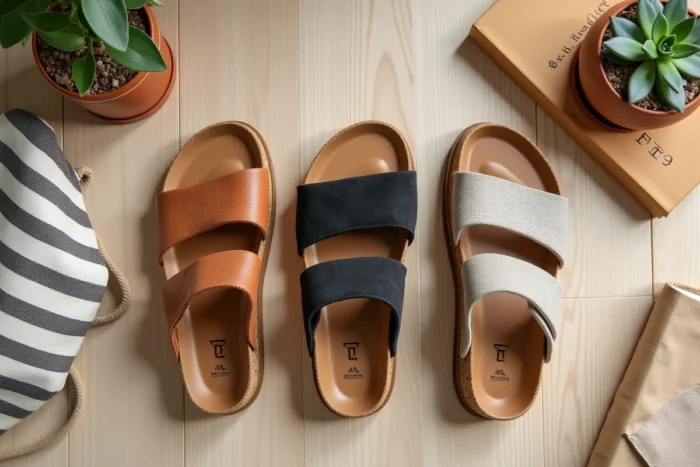
Selection criteria based on use: how to choose the right alternative
We find that most comparative guides list brands without prioritizing uses. The choice of an alternative to Birkenstock depends on three technical parameters.
Type of sole and biomechanical need
A standard foot without pathology can accommodate any properly molded anatomical sole. In contrast, a pronated foot, a bunion, or a stressed plantar fascia requires specific arch support. OOFOS for recovery, Naot for volume, Mephisto for absorption: each brand addresses a distinct need.
Frequency of wear and durability
Daily wear year-round requires high-density cork-latex (Birkenstock, Naot). Seasonal or occasional use makes EVA or standard cork alternatives (Plakton, Decathlon) quite viable.
Budget and style priority
- Under 40 euros: Decathlon, EVA models like Arizona, decent comfort for light use
- Between 40 and 80 euros: Plakton, artisanal cork, varied designs, good comfort-aesthetic compromise
- Over 80 euros: Naot, Mephisto, OOFOS, advanced technologies for specific needs
The comfort sandal market is no longer just about choosing between Birkenstock and a cheaper copy. The alternatives differ by their sole technology and their morphological target, not just by their price or look. First identify the foot’s need, then filter by budget and style: this is the only method that avoids returns and disappointments.